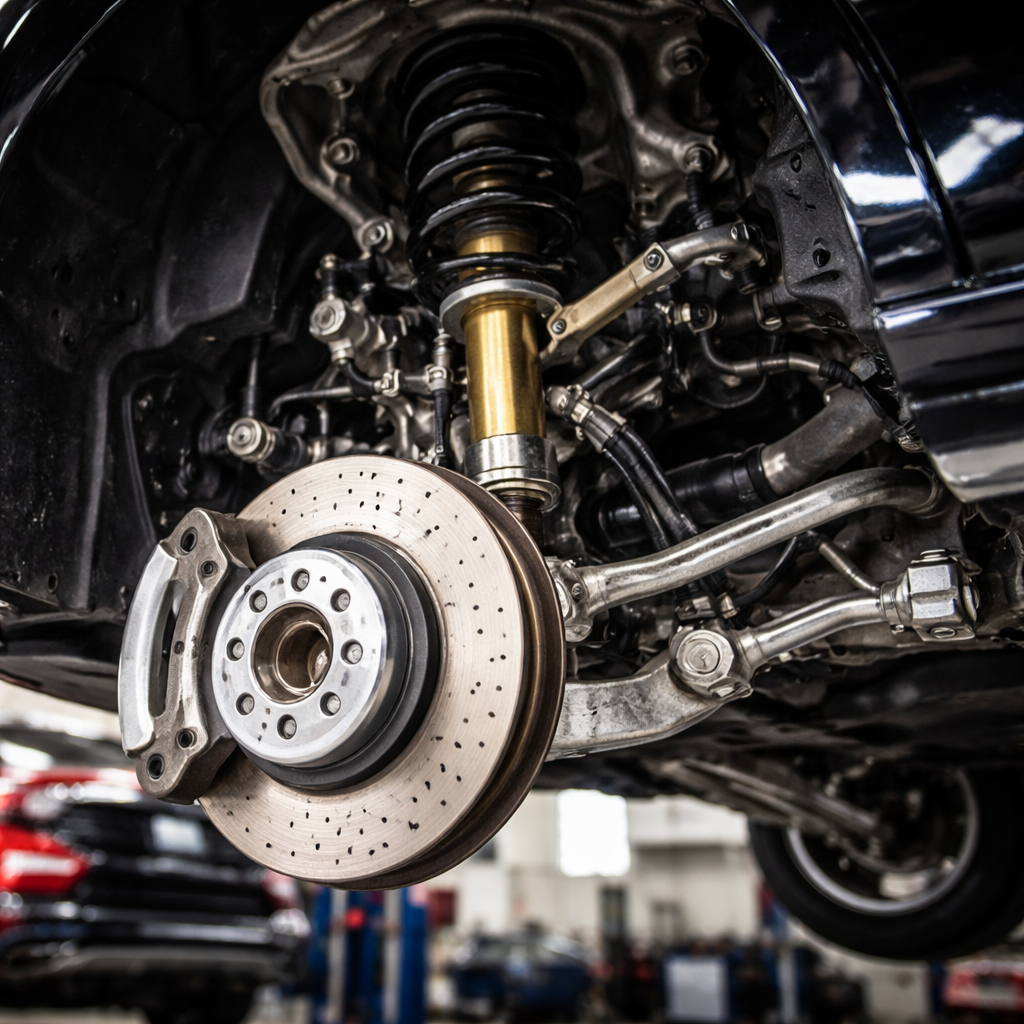
Why Suspension Wear Shows Up After 80,000 Miles
At AutoTechnic, we specialize in servicing and repairing German vehicles, with a strong emphasis on Mercedes-Benz models built for the U.S. market. As an enthusiast-owned shop serving Mooresville, NC and the surrounding Lake Norman area, we see daily how American road conditions affect Mercedes suspension systems as mileage adds up.
After roughly 80,000 miles, many Mercedes owners begin to notice subtle but important changes in how their vehicle drives. Ride quality may feel less controlled, steering may lose some of its precision, or tire wear may start appearing uneven. These concerns are common on U.S.-spec Mercedes vehicles and often signal that suspension components are reaching the end of their effective service life.
On models such as the W204 and W205 C-Class, W212 and W213 E-Class, and SUVs including the GLC and GLE, suspension wear tends to follow predictable patterns. This article is based on what we routinely see in our shop and explains which components typically wear first, how those issues show up behind the wheel, and when a professional suspension inspection becomes the right next step.
Control Arms and Bushings: The Most Common Wear Items
Control arms and their rubber bushings are among the most common suspension components to wear out on American Mercedes-Benz models after 80,000 miles. These parts play a critical role in keeping the wheels properly positioned while allowing controlled movement during braking, cornering, and uneven road surfaces.
On vehicles like the W204 C-Class and W212 E-Class, front lower control arm bushings frequently deteriorate due to age, heat, and constant flexing. As the rubber breaks down, the suspension can no longer maintain proper geometry. Drivers may notice clunking noises over small bumps, vague steering response, or light vibration through the steering wheel.
When diagnosing these concerns, we look closely for excessive movement in the bushings under load. Even if components appear intact during a basic visual inspection, worn bushings often reveal themselves during braking or turning. Experience with Mercedes suspension systems is essential here, as early wear can be easy to miss without knowing where to focus.
For owners experiencing these symptoms, our technicians typically perform a comprehensive evaluation through our Mercedes-focused diagnostic and repair services to determine whether worn control arms are the primary issue or part of a broader suspension concern.
Pro Tip: A single worn control arm bushing can quickly increase stress on surrounding suspension and steering components. Addressing bushing wear early often helps prevent accelerated tire wear and additional component failure.
Struts, Shocks, and AIRMATIC Suspension Wear Patterns
Mercedes-Benz vehicles sold in the U.S. are equipped with either traditional steel suspension systems or AIRMATIC air suspension, depending on model and trim. Each system exhibits different wear patterns as mileage climbs past 80,000 miles.
On steel-spring setups, worn shocks and struts are common. As damping ability declines, the vehicle may feel bouncy over uneven pavement or less composed during braking. This loss of control is often noticeable on higher-mileage W205 C-Class and W213 E-Class sedans that spend significant time on the highway.
AIRMATIC-equipped models such as the GLC, GLE, and certain E-Class trims introduce additional components that can wear with age. Air struts may develop leaks, compressors can become overworked, and ride-height sensors may begin providing inconsistent data. In our shop, these issues are typically confirmed through ride-height measurements, system fault scans, and physical inspection of air suspension components.
AIRMATIC problems often begin as minor ride quality complaints before progressing to warning messages or visible sagging. Early diagnosis plays a key role in limiting repair scope and avoiding secondary damage.
Pro Tip: Mercedes suspension systems are engineered as complete assemblies. Replacing only the most obvious failed component may not fully restore ride quality if related parts are already near the end of their service life.
How Suspension Wear Leads to Alignment and Tire Problems
One of the most common consequences of worn suspension components is uneven tire wear. When control arms, bushings, or struts can no longer maintain proper alignment angles, the tires absorb the impact.
We frequently see inner-edge or outer-edge tire wear on Mercedes vehicles where alignment settings will not stay within specification. In these situations, performing an alignment alone does not solve the problem. The underlying suspension wear must be corrected first, or the alignment will quickly shift again.
This pattern is especially common on GLC and GLE models, where vehicle weight places additional stress on suspension joints over time. During diagnosis, we always check for joint movement and component play before making alignment adjustments.
Once suspension issues are addressed, a proper Mercedes-specific wheel alignment is essential to restore handling and extend tire life.
Pro Tip: Repeated alignments that fail to hold are often a sign of worn suspension components rather than an alignment issue itself. Correcting the mechanical wear is the only way to achieve lasting results.
For additional safety-related context, guidance from the National Highway Traffic Safety Administration helps explain how worn suspension and steering components can affect vehicle stability and control.
Rear Suspension and Sway Bar Wear on High-Mileage Mercedes Models
While front suspension components tend to get the most attention, rear suspension wear is just as common on U.S.-market Mercedes vehicles once mileage climbs past 80,000 miles. Rear control arms, trailing arms, and sway bar links all play a role in keeping the vehicle stable during cornering and lane changes, especially at highway speeds.
On models like the W212 and W213 E-Class as well as the GLC and GLE, worn rear suspension components often show up as a loose or unsettled feeling from the back of the vehicle. Drivers may notice a slight delay when changing lanes or a feeling that the vehicle shifts weight more than it used to during turns. These symptoms are easy to overlook but often point to worn bushings or sway bar links in the rear suspension.
Sway bar links and bushings are especially prone to wear because they are constantly working to control body roll. As these parts loosen, owners may hear rattling noises over uneven pavement or speed bumps. During inspection, we check these components for play and deterioration, as they can significantly affect handling even though they are relatively small parts.
Pro Tip: Rear suspension wear often develops quietly. Addressing worn sway bar links or rear bushings early can restore vehicle stability and prevent unnecessary stress on other suspension components.
How Mercedes Owners Can Spot Suspension Issues Early
Suspension wear often becomes visible through tire wear patterns before noises or warning lights appear. In many cases, the tires reveal alignment changes caused by worn bushings or joints long before the driver notices a change in ride quality.
A steering wheel that feels loose or requires constant correction at highway speeds frequently indicates deteriorating control arm bushings or suspension joints that can no longer hold proper geometry. This is a common complaint on higher-mileage C-Class and E-Class sedans.
Repeated alignments that do not last are another strong indicator of underlying suspension wear. When alignment angles continue to shift, it usually means worn components are allowing movement that adjustments alone cannot correct.
On AIRMATIC-equipped Mercedes models, subtle changes in ride height may signal early air suspension issues before warning messages appear. Identifying these changes early often helps prevent more extensive repairs.
Frequently Asked Questions About Mercedes Suspension Wear
How long does a Mercedes suspension typically last?
On most U.S.-market Mercedes-Benz models, major suspension components such as control arms, bushings, and shocks often begin to show noticeable wear between 70,000 and 100,000 miles. Longevity depends on driving habits, road conditions, and how quickly wear is addressed.
Can an alignment fix suspension wear?
An alignment alone cannot correct worn suspension components. If parts such as control arm bushings or ball joints are worn, alignment settings will not hold. Proper repairs must be completed before an alignment can be effective.
Is it safe to drive with worn suspension components?
Driving with worn suspension parts can reduce stability, affect braking performance, and accelerate tire wear. Over time, this can increase safety risks and lead to more costly repairs if left unresolved.
When to Schedule a Mercedes Suspension Inspection in Mooresville, NC
If your Mercedes has surpassed 80,000 miles and you are noticing changes in ride comfort, steering response, or tire wear, a professional suspension inspection is a smart step. Identifying wear early often helps protect overall vehicle performance and safety.
At AutoTechnic, we focus on diagnosing and repairing suspension systems on U.S.-market Mercedes-Benz vehicles. Our approach emphasizes accurate diagnosis, quality parts, and repairs that restore factory ride and handling characteristics.
To schedule a suspension inspection or speak with a Mercedes specialist, visit our contact page or call (704) 696-8019. Our Mooresville, NC shop proudly serves Mercedes owners throughout the Lake Norman area.