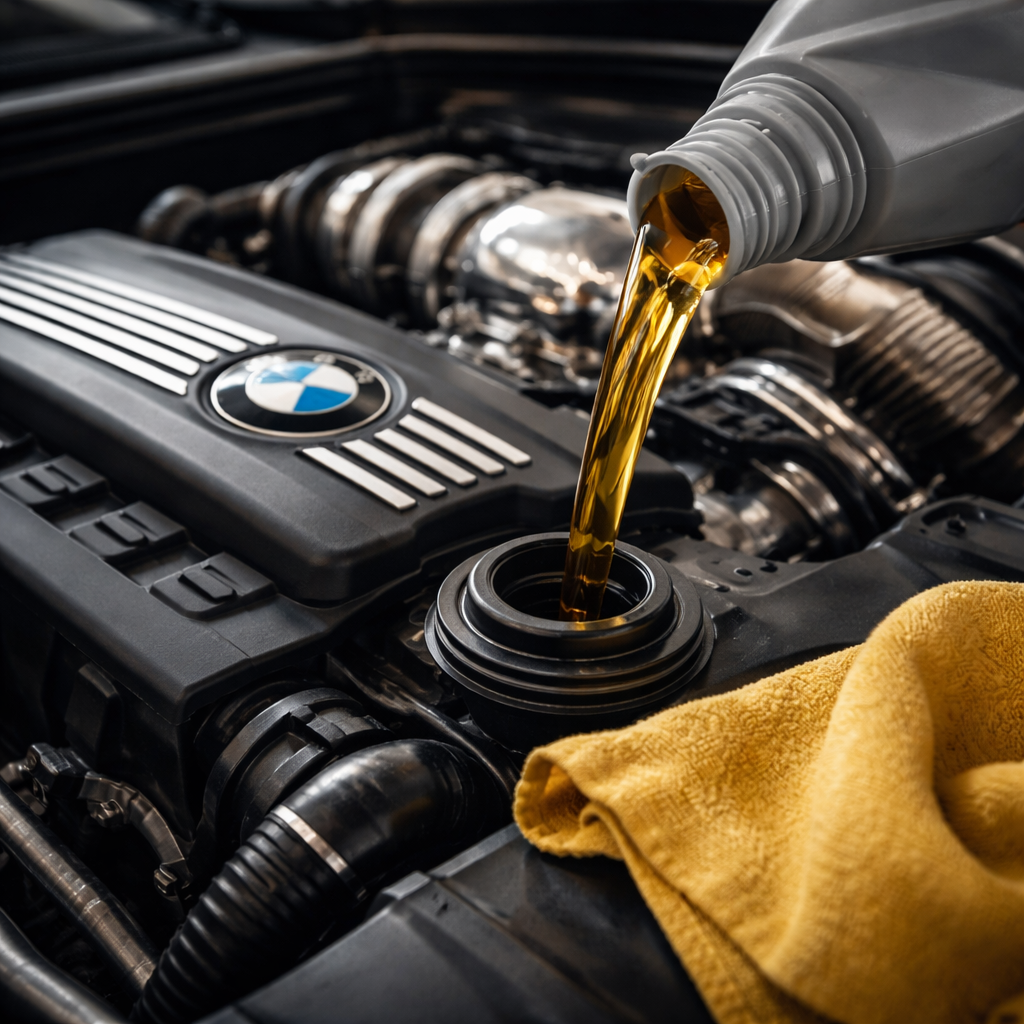
At AutoTechnic, BMW service is at the core of what we do. As an independent European repair shop in Mooresville, we work every day with BMW models that are common on American roads, including the 3 Series, 5 Series, X3, and X5. Our work goes far beyond fixing cars when something breaks. Much of our time is spent helping owners understand how their BMW is engineered and what that means for long-term reliability, operating costs, and peace of mind. One of the most common topics that comes up in these conversations is oil consumption.
Many BMW owners first become concerned after seeing an oil level warning or being told that their vehicle is “using oil.” While there is some truth to the idea that BMW engines consume oil differently than many mainstream vehicles, that explanation is often incomplete and misleading. Oil consumption in BMW engines is closely tied to engineering decisions, emissions requirements, and real-world driving conditions in the United States. When those factors are understood, oil consumption becomes far less mysterious and far easier to manage responsibly.
Why BMW Engines Consume More Oil
BMW engines used in models such as the 3 Series, 5 Series, X3, and X5 are designed with performance, efficiency, and driving refinement as primary goals. To achieve that balance, BMW engineers build engines that operate at higher temperatures and with tighter internal tolerances than what is typical in many mass-market vehicles. These characteristics allow the engine to respond quickly, operate efficiently, and deliver the driving experience BMW is known for.
Those same characteristics also influence how oil behaves inside the engine. Higher operating temperatures and reduced internal friction can result in small amounts of oil being consumed during normal operation. Unlike vehicles designed to tolerate minimal owner involvement, BMW engines assume a more attentive maintenance approach. When owners apply standard maintenance expectations to a BMW, oil usage can appear excessive even when the engine is functioning exactly as intended.
Turbocharging and Oil Consumption
Most BMWs sold in the United States over the past decade rely on turbocharged gasoline engines. Turbocharging allows smaller engines to produce strong power, but it also exposes engine oil to significantly higher heat and pressure than naturally aspirated designs. In models like the 3 Series, 5 Series, X3, and X5, oil plays a critical role not only in lubrication but also in cooling turbocharger components and managing thermal stress throughout the engine.
In real-world driving conditions, oil is subjected to repeated heat cycles. Highway driving, extended idling in traffic, frequent short trips, and spirited acceleration all affect how oil breaks down over time. When oil degrades more quickly, consumption can increase even if there are no mechanical faults present. From our shop experience, oil consumption concerns are most common in vehicles that strictly follow extended factory service intervals without adjusting for actual driving habits. This is why having oil consumption evaluated by a shop experienced in BMW auto repair is so important, rather than assuming all oil use is automatically normal.
Common Oil Consumption Patterns in BMW Models
Oil consumption in BMW vehicles almost always develops gradually rather than appearing suddenly. Owners may first notice an occasional oil level warning that seems to appear earlier than expected between services. Over time, those warnings may become more frequent if driving habits, oil change intervals, or operating conditions remain unchanged.
Modern BMW models sold in the United States no longer use traditional dipsticks. Instead, oil level information is communicated through electronic sensors and displayed through the vehicle’s onboard systems. While these systems are generally accurate, they require proper interpretation. Oil-related warnings can be influenced by recent driving conditions, engine temperature, or sensor data trends. Proper evaluation requires experience with BMW electrical systems and diagnostics, as oil level concerns are often tied to broader vehicle data rather than a single mechanical issue.
When Oil Consumption Becomes a Problem
Some oil consumption can be considered normal for BMW engines, particularly as vehicles accumulate mileage. What matters most is consistency. Oil usage should remain predictable over time. When oil level warnings become frequent, top-offs are needed more often, or oil-related messages are accompanied by changes in engine performance, further evaluation is necessary.
In our experience, early assessment makes a significant difference. BMW-specific diagnostics allow us to determine whether an engine is operating within expected parameters or if an underlying issue is developing. Addressing oil consumption concerns early often prevents minor issues from escalating into more serious and costly repairs later.
BMW Ownership vs. Standard Vehicles
Many BMW owners transition from vehicles that required little attention between oil changes. BMW ownership, particularly for models like the 3 Series, 5 Series, X3, and X5, requires a different mindset. Regular oil level awareness, service intervals adjusted to real-world driving conditions, and prompt attention to warning messages are essential parts of responsible ownership.
This does not mean BMWs are unreliable. On the contrary, owners who understand these expectations often enjoy excellent long-term performance. The key difference is recognizing that BMW engineering prioritizes driving experience and efficiency, which requires a higher level of maintenance awareness than most standard American vehicles.
Practical Guidance From the Shop
Over years of servicing BMW vehicles in the United States, we have consistently seen better outcomes when owners take a proactive approach to oil-related concerns. Monitoring oil levels periodically, even when no warning is present, helps establish a baseline for what is normal for a specific vehicle. Responding promptly to oil level messages rather than delaying action also plays an important role in preventing secondary issues.
Evaluating oil consumption as part of an overall engine health assessment provides valuable context. Oil usage rarely exists in isolation and is often connected to driving patterns, maintenance history, and operating conditions. This proactive approach provides peace of mind, especially for owners who plan to keep their BMW well beyond the initial warranty period.
Common Owner Questions
Is oil consumption normal in BMW models like the 3 Series, 5 Series, X3, and X5?
Some oil consumption can be normal in these BMW models, particularly as mileage increases and depending on how the vehicle is driven. BMW engines operate at higher temperatures and tighter tolerances than many mainstream vehicles, which can lead to measurable oil use. What matters most is whether that consumption remains consistent over time.
Does oil consumption mean my BMW engine is failing?
In most cases, oil consumption alone does not indicate engine failure. Many BMW engines operate reliably for years while consuming some oil. Sudden changes in oil usage, frequent warning messages, or accompanying drivability concerns should always be evaluated to rule out developing problems.
Is it okay to just keep adding oil when the warning appears?
Adding oil may temporarily resolve a warning message, but it does not explain why the oil is being consumed. Repeated top-offs without proper inspection can allow underlying issues to go unnoticed. A professional evaluation helps determine whether the oil usage you are seeing is normal or requires attention.
Schedule a BMW Oil Consumption Evaluation
If you are seeing repeated oil level warnings, needing to add oil more frequently, or simply want clarity on what is normal for your BMW, a professional evaluation is the best next step. Oil consumption should always be assessed in the context of your specific BMW model, driving habits, mileage, and overall engine condition.
At AutoTechnic, BMW service is a core focus of our shop. Our technicians work with BMW vehicles every day and have extensive experience interpreting oil level data, warning messages, and diagnostic information across models like the 3 Series, 5 Series, X3, and X5. We take the time to explain what we find so you can make confident decisions about your vehicle’s care.
To schedule an inspection or consultation, you can contact us through our contact page or call us directly at 704-696-8019. Our goal is to provide clear, honest guidance and help you keep your BMW performing as intended.